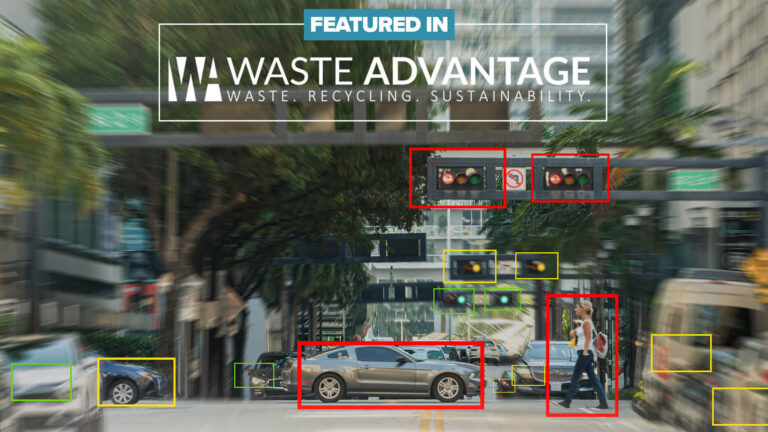
As featured in Waste Advantage Magazine – August 2026
Catching contamination is the easy part. Proving where it started, tying it to the right account, and documenting what you did is where the real work begins.
Most people in the waste and recycling industry treat contamination as something that happens at the back end. A load gets rejected at the MRF, a fee shows up, the “reject pile” grows, and everyone scrambles to figure out who sent the bad material across the scale. By then, the problem has already cost money. The bag of household trash riding in the recycling cart, the propane tank buried in a commercial container, the mattress dropped on the tipping floor, all of it started somewhere upstream, often days before anyone wrote it down. That gap between when contamination happens and when it gets documented is where haulers and facility owners lose the most ground.
The pressure is only building. Operators are being asked to keep an eye on more streams than ever: single-stream recycling, yard waste, food waste, organics, and in plenty of jurisdictions, municipal solid waste itself. California’s SB 1383 pushed organics monitoring into territory that used to be reserved for traditional recycling, and other states are watching closely. At the same time, municipalities, regulators, and commercial customers want proof. They want diversion numbers, compliance records, and evidence that enforcement is being applied evenly across a route or a service area.
For a long time, the industry answered that demand the same way it always had. A driver noticed something, tried to remember it, and wrote it up later if there was time. Anyone who has run a route knows how that goes.
Knowing is Not the Hard Part
Here is what most operators already understand: knowing that contamination happened is rarely the big problem. The nearly impossible task is proving where it came from, tying it to the right account, and showing what was done about it.
A route supervisor can usually tell you which neighborhood is giving them trouble. They may not be able to tell you which house. A facility manager knows prohibited material is coming across the scale, but once it hits the pile, connecting it back to a specific truck or customer gets a lot harder. And when a municipality asks for documentation that education and enforcement are actually happening, scattered driver notes and memory simply do not hold up.
Good documentation closes that loop. It captures what happened, when, where, who was responsible, and what happened next. That record turns into something useful for customer education, billing, compliance reporting, and the diversion goals everyone is being measured against.
It also changes the tone of the conversation with the customer. A vague reminder e-mail about keeping plastic bags out of the cart rarely lands. A dated photo of that customer’s own cart, with the offending item in plain view, lands every time. It gets immediate attention and gives people a chance to fix the behavior before it turns into a fee or a service change.
The Route is Your First and Best Shot
The collection point is the closest you will ever get to the source. Once a cart is dumped and the material mixes with the next 40 stops, assigning responsibility becomes purely guesswork.
The trouble is that asking drivers to police contamination works against everything else you need them to do. They are watching traffic, working a tight route, running the equipment, and trying to keep pace with tight route deadlines. Telling them to also inspect every load, log it, and stay on schedule is a good way to end up with neither safety nor reliable data.
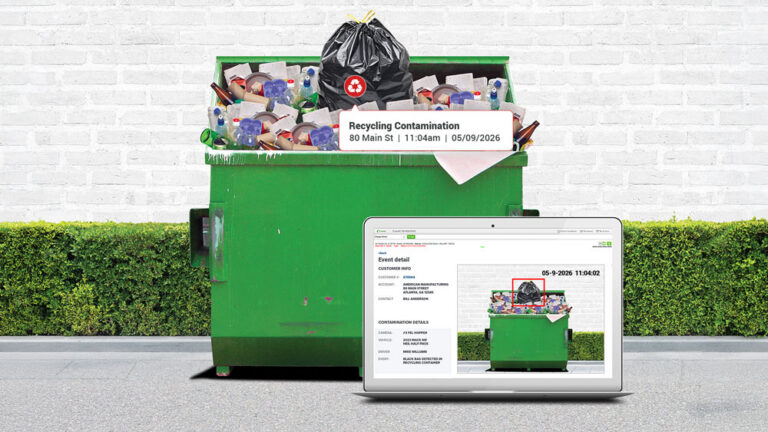
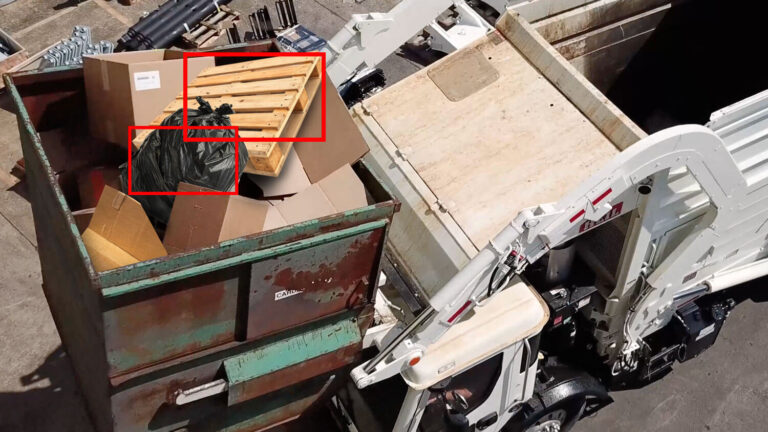
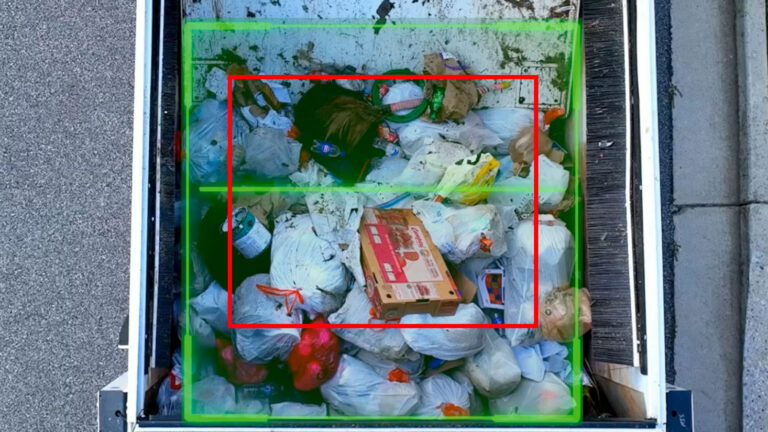
This is why documentation must live inside the collection process rather than be added on top of it as one more task. Camera systems built for the hopper and paired with AI are able to recognize contamination as the material drops in, allowing it to quickly and reliably capture the event without the driver lifting a finger. Automated contamination detection is built around exactly that idea. A camera mounted in the hopper passively documents and analyzes each load, flags the contamination, and ties it to the service location, all while the driver keeps driving.
That matters most with repeat offenders. One wrong item might call for a friendly note. A pattern calls for something firmer. Without a clean record tied to the right customer, you cannot tell the difference between a one-time mistake and a chronic offender, and you cannot show anyone that the situation is improving.
Detection Means Little Without Association
This is the part operators tend to underestimate. Catching contamination on camera is only half the job. If you cannot connect that event to the correct account, you are left eating the cost and holding responsibility for the contamination.
Flag the wrong customer, and the program loses credibility the first time someone disputes a charge. Flag no one, and the event becomes yet another expense the hauler is forced to absorb. Accurate association is what moves a contamination program from general nagging to targeted correction.
This is where keeping the record aligned with the customer system earns its keep. When contamination events feed into a waste hauler software platform, the documentation is displayed and available right alongside the customer’s service history, billing activity, route, and prior notices. Instead of blasting the same generic reminder across an entire route, you can reach the handful of accounts actually causing the trouble.
That record also supports the full range of responses, in order: a mailed pamphlet or a cart tag for a first offense, a phone call or a service note when it continues, a warning letter, then a contamination fee, and, in the worst cases, discontinued service after repeated violations. The goal was never to lead with punishment. It is to run a clear, consistent process that gives the customer room to correct before things escalate. The hauler builds a record to back up each step, so a contamination problem gets solved without turning into a fight.
Facilities Have the Same Problem, One Step Downstream
Everything that applies on the route applies at the transfer station, the recycling center, the organics site, and the MRF. A scale-house check catches what is visible on top. It does nothing about the tires, mattresses, appliances, construction debris, tanks, and batteries buried in the load, which tend to surface only after the truck has dumped and pulled away. By then, figuring out who brought it in is rough. Industry estimates suggest facilities miss the majority of billable special items this way, and every unassigned item becomes a processing cost the facility eats.
Sending people onto an active tipping floor to sort through loads is not a real answer either. That floor has loaders moving, trucks backing in, and tight schedules. It is one of the more dangerous places in the operation and slowing it down for manual inspection costs throughput you cannot spare.
Facility contamination detection takes the same approach indoors. Cameras at the scale house and over the tipping floor record disposal activity and use advanced technology to pick out prohibited and special materials as loads come in, and associate them with the responsible vehicle, hauler, or customer, with photo evidence attached. The alerts are specific enough to act on. A mattress and two tires flagged in what was billed as a cardboard and paper load, tied to the plate number, the customer account, and the time it crossed the floor. That supports cleaner billing, recaptures revenue that used to disappear into unassigned processing, and keeps people off the floor. It also gives the facility an honest picture of what is coming through the door, which is the only real starting point for improving diversion.
From Evidence to Behavior Change
A contamination program that stops at detection leaves most of the value on the table. What happens after the event is logged is what moves the numbers. Once an event is documented and tied to the right customer, you can run a structured correction process instead of sending a one-off complaint. For first-time or minor issues, education is usually enough. A pamphlet showing acceptable materials, a photo of the actual problem item, a quick call from customer service—any of these can correct the behavior early.
For repeat issues, the history is what carries the real weight. The account shows the prior notices, the earlier conversations, the previous events, and the fees already applied. That protects both sides. The customer can see the pattern laid out plainly, and the hauler can show a regulator or a contract holder that the matter was handled fairly and in steps.
That distinction is huge. A strong record carries more than the bare fact that a customer contaminated. It shows that you found the problem, told them, tracked the response, and gave them a fair chance to change before you escalated. That is the difference between a program that survives an audit and one that falls apart under it.
It All Comes Back to Keeping Material Out of the Ground
The purpose of all the regulations and compliance efforts were never actually about just the documentation. The point is keeping recyclable and recoverable materials out of the landfill.
Contamination chips away at that goal in ways that compound exponentially. Mix the wrong items into a recycling load and its market value drops. Processing slows. More of it ends up the ground. In the worst cases, material that could have been recovered gets landfilled anyway because the whole stream is too dirty to run efficiently. Cleaner streams help everyone in the chain. Haulers see fewer rejected loads and fewer customer fights. Facilities run safer and faster. Municipalities and commercial accounts get the records they need to prove diversion to whoever is asking.
To get there, the industry needs better information at the two points where contamination enters the system: 1) on the route, before the material is mixed with the rest of the day, and 2) at the facility, before responsibility is lost in the pile. In both places, the big value comes from connecting a clear visual record to the right customer, vehicle, account, or load.
Building the Loop that Works
The contamination programs that work follow a simple loop. Identify the contamination. Document it with visual evidence. Associate it with the responsible party. Educate the customer, track the outreach, apply fees or enforcement when it is warranted, and watch whether the behavior changes.
Break that loop at any point and contamination stays at a recurring cost you can never quite pin down. Keep the loop intact and it becomes a problem that you can manage. Tools like contamination detection, connected to a billing and customer platform, give haulers and facility owners one continuous record from the curb through final processing. That record is what supports better decisions, easier customer conversations, safer operations, and the net diversion results the whole industry is now being held to.
There will always be some level of contamination to deal with. The only real question is whether those events stay undocumented headaches or become information you can act on. For anyone serious about improving diversion, cutting landfill volume, and holding customers accountable, the documentation has stopped being back-office paperwork. It has become one of the most important tools on the route and on the facility floor.