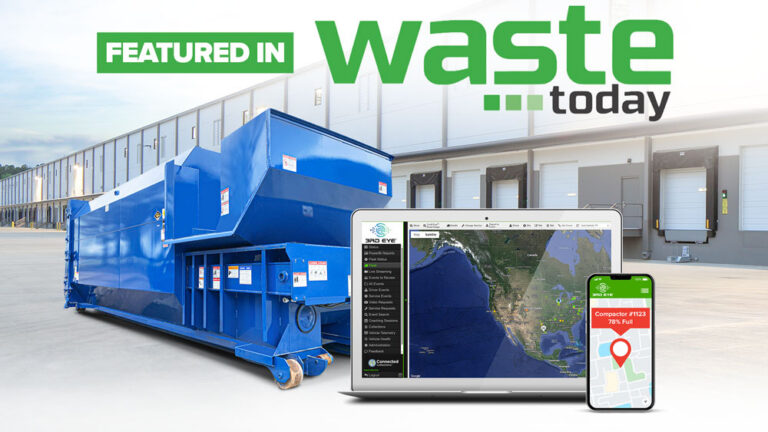
As featured in Waste Today Magazine August, 2026.
Connected compactors can turn waste equipment from a guessing game into a service that haulers can manage.
In most facilities, a compactor is supposed to be the piece of equipment nobody thinks about. It sits at the back of the building, crushes the day’s waste and gets hauled away when it fills up. When it runs the way it should, it rarely comes up in a meeting.
The trouble starts when something slips. Pull a compactor too early, and a truck and driver have been sent for a half-empty box. Get to it too late, and the site could be dealing with overflow, odor, downtime and safety concerns, and the hauler could have an angry customer on the phone. Either way, the equipment that was supposed to stay invisible is suddenly the most visible thing on the property.
In a dense urban market, a mistimed pull is a problem, but the next stop could still be nearby. In rural territories, where the next customer might be 30 miles down the road, the same mistake turns into wasted miles and labor and a service call nobody budgeted for.
That gap is where haulers, equipment owners and facility operators are paying closer attention. The compactor still matters. However, what now matters just as much is the information it provides.
At the Wells Blue Bunny facility in Le Mars, Iowa, that shift is on display. The plant runs three connected, stationary compactors that report on themselves in real time around the clock. OC Sanitation, the hauler serving the site, owns the units and rents them to Wells Blue Bunny with support from DMH, the local Marathon Equipment Co. dealer. The package pairs Marathon compaction equipment with 3rd Eye Connected Compactor technology and runs through the Connected Collections platform.
The combination gives OC Sanitation a clear, current read on how full each unit is, how it is being used, whether it is operating properly and when it needs service. The same data gives DMH firmer ground for the equipment conversations that follow, from sizing and service planning to maintenance and life cycle decisions, resulting in a stronger waste equipment program.
A Compactor Behaves Like a Remote Asset
It is easy to think of a compactor as fixed equipment because it does not move. From a management standpoint, a compactor behaves like a remote asset. It lives at someone else’s site, operates outside the hauler’s direct line of sight and can be used differently from one location to the next.
In many cases, the hauler owns the compactor and rents or provides it to the customer as part of a service program. In other cases, a facility, retailer, supermarket chain, manufacturer, hospital, university or distribution center can own and manage the equipment directly and use a hauler only for pulls. Either way, the people responsible for that compactor need reliable visibility into fullness, utilization, working condition and service timing.
Without good data, managing that asset comes down to guesswork. Site staff might call when a unit looks full, but one person’s idea of full is another person’s half-empty. A driver could show up to find the box was not full or that it should have been pulled days earlier. Additionally, the condition of the equipment can stay a mystery until it breaks down and a technician is dispatched to find out why.
Multiply that across several units in several towns, and the whole program starts running on opinion instead of fact.
That is the problem the Wells Blue Bunny setup was built to solve. OC Sanitation needs accurate information to keep service tight and equipment operating. DMH supports that effort with the visibility to help ensure the equipment is properly applied and managed over time.
More Than the Old System
The site previously had remote monitoring through another provider. What it lacked was depth.
A basic monitoring system can tell a user that a unit might need attention, but the information often stops there. That can help with one part of the job, but it does not always provide the hauler or equipment owner with enough visibility to manage the asset effectively.
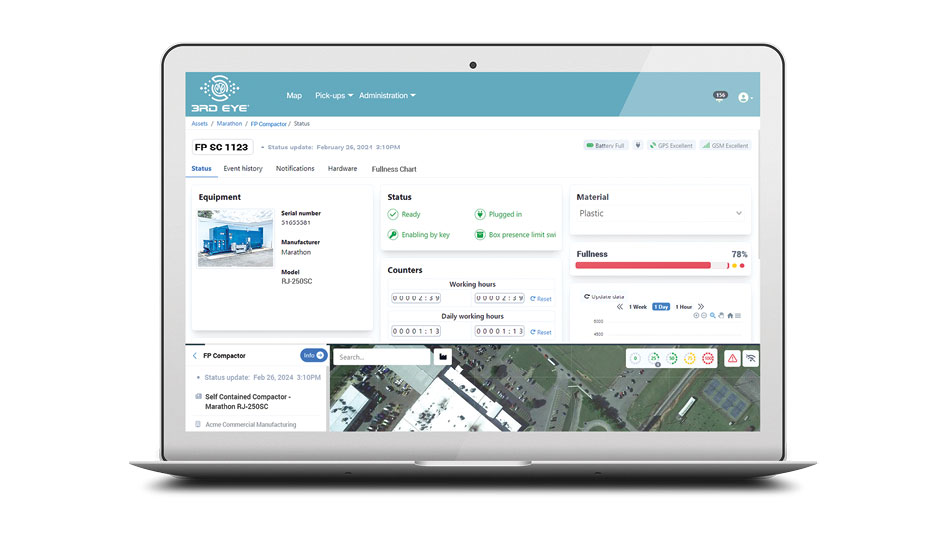
The 3rd Eye platform fills in much more of the complete picture. Users can see fullness, location, utilization, working condition and status, all in a user-friendly interface. They can receive notifications when something needs attention and easily pull reports that show how each unit is performing.
That last part is where the value starts to compound. Knowing a compactor is full helps with the day’s route. Knowing how the unit has been used over weeks and months helps answer bigger questions. Is it the right size for the site? Is it pulled too often? Is it pushed too hard? Is it nearing the point where maintenance or replacement should be planned? Is the customer’s waste volume changing?
Those questions matter to the hauler, the customer and the dealer supporting the equipment. They also matter to anyone responsible for controlling costs across a compactor fleet.
Adjusting Service Without a Site Visit
One feature in the Wells Blue Bunny application is remote threshold adjustment. OC Sanitation can change the fill-level percentage that triggers collection without sending someone to the site.
That sounds minor until you account for how much waste volume can change. Production ramps up and slows down. Seasons shift the load. A food manufacturing plant running hard in summer might not generate the same volume in February. A retailer could see different waste patterns during holidays. A supermarket could have changing volumes tied to promotions, weather or supply chain activity.
When these factors change, the hauler can adjust the threshold from the office instead of dispatching someone to reconfigure the unit in person. Service gets tuned to what is happening at the site rather than a number somebody set once and never adjusted again.
Detailed usage history can show whether a compactor is undersized and pulled too often or oversized and tying up capital that could be used elsewhere. When the hauler, dealer and customer are looking at the same operating data, the conversation stops being a matter of opinion.
This helps when recommending a different unit, adjusting a service schedule, explaining a charge or planning for future needs.
Catching Problems Before They Cost
Compactors are built tough, but they still are machines doing continuous hard work in rough conditions. If maintenance is handled only after something breaks, a small issue has plenty of time to turn into a bigger and more expensive problem.
Connected Compactor changes the timing. Real-time monitoring and alerts can flag a developing issue early so a service team can plan the work, show up with the right parts and keep a minor fix from becoming an emergency.
For the customer, that means fewer interruptions. For the hauler or equipment owner, it means better use of technician time and fewer panic calls.
For the dealer supporting the equipment, this setup creates a clearer path for service planning and long-term equipment performance.
Used this way, the system does more than schedule pickups. It becomes an asset-management tool.
With a clear history of how a unit has been used and how it has held up, the equipment owner can plan replacements on evidence rather than age, appearance or guesswork. A compactor does not have to be retired because it looks tired. It also does not have to stay in service until failure. The decision can be based intelligently on what the operating data shows.
Well-Managed Equipment
OC Sanitation moved to Marathon compactors about three years ago because the units last and cost less to own over their lives. The Wells Blue Bunny job shows what durable equipment can do when paired with better visibility.
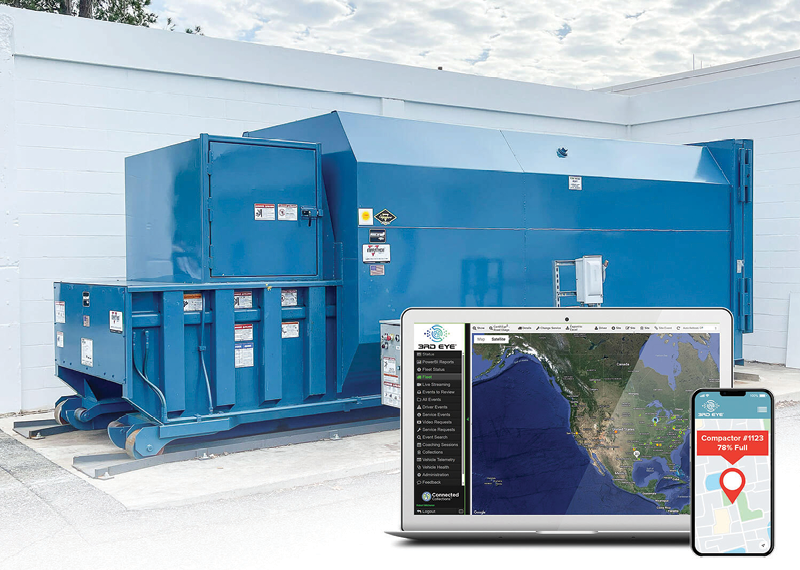
A well-built compactor still can be underused, over-serviced or pulled at the wrong time. The Marathon units handle the physical work. 3rd Eye Connected Compactor makes it easier to see how full the unit is, how it is being used, what condition it is in and when it needs service.
Together, they create a stronger solution than either piece would on its own.
For DMH, that combination strengthens the support it can provide after the sale. The dealer is not just helping place equipment; it is helping the hauler and customer make better decisions about sizing, service, maintenance and life cycle planning.
A compactor program does not end when the unit is delivered. The real value shows up over years of daily use. When the dealer can support the hauler with equipment knowledge and operating data, the customer gets a more reliable program and the equipment owner gets a better return on the asset.
In a competitive market, that support matters. Basic monitoring can offer a number or two, but thin data only solves a thin part of the problem. A more complete, connected platform gives haulers and equipment owners the information they need to manage compactors as part of a larger service and asset program.
Rural Raises the Stakes
This all matters more in a rural service area. In a city, an early pull or unnecessary call costs money, but the next stop could be close. Stretch the distances out across northwest Iowa, and the math changes.
A truck sent too soon racks up miles for a half-full container and could have been used for a full compactor. A truck sent too late creates a problem that could require a special trip to fix. A technician dispatched without sufficient information might show up unprepared and have to come back. Every avoidable mile matters when the service territory is spread out.
Better fullness data tightens pull timing. Status and condition data sharpen maintenance planning. Use data supports smarter equipment decisions over the long haul.
None of it replaces the experience of the people running the operation. It gives them better information to work with.
For haulers managing compactors across customer sites, that is the practical value. The technology helps dispatchers, route managers, service teams and ownership make better calls before a problem reaches the customer.
Smarter Collections, Lighter Footprint
The sustainability payoff starts with a simple change: pulling containers only when they are full.
When a hauler pulls a container based on fullness instead of a calendar or a guess, it can skip unnecessary trips. That means fewer miles, less fuel, less labor and less wear on the truck and the container.
The same visibility helps with recycling and back-of-store waste handling in general. When compaction and recycling equipment are monitored well, customers and haulers have better information to recover more material and run their equipment better.
Those improvements can support operating goals and sustainability targets at the same time. Better information ends up removing waste from the system itself.
That is where connected equipment fits into the larger waste and recycling conversation. It is not only about whether a compactor is full. It is about using data to make collection, maintenance, equipment use and material recovery more efficient.
Turning Compaction Into a Managed Process
The Wells Blue Bunny installation is a good picture of where this part of the industry is going. The compactor is doing the same job. What has changed is how carefully that equipment can be managed.
OC Sanitation has the information to time pulls, manage service and support the customer. DMH has the data to support equipment performance, maintenance planning, life cycle decisions and stronger long-term service. Wells Blue Bunny gets waste equipment that is reliable and responsive, which is exactly what a facility needs from a compactor program.
A connected compactor turns a job that used to be reactive into one that can be planned.
Instead of waiting for a phone call, checking a unit by hand or working from limited monitoring data, service providers can run on current information and schedule based on what is in the box. Instead of guessing whether a unit is the right fit, they can look at utilization. Instead of waiting for a failure, they can use alerts and operating history to plan maintenance.
Compaction equipment always needs to be durable, correctly sized and properly installed and maintained. The Wells Blue Bunny site shows how much that durability is worth when it comes with a clear view of what the equipment is doing.
For hauling companies that own and manage compactors for their customers, that visibility can improve service, protect the asset, reduce unnecessary miles and support better long-term decisions. For facilities that own their compaction equipment, the same visibility creates efficiency, accountability and control. For dealers supporting the equipment, it provides the data needed to help customers get more value over time.
In every case, the advantage is the same: less guessing, better planning and a compactor program that can be managed with the same discipline as the rest of the operation.