How 3rd Eye helps fleets control costs, strengthen safety practices, and improve community cleanliness.
Residential refuse routes look simple on the surface, but every fleet manager knows the challenges that hide inside the daily routine. One of the most persistent, costliest, and challenging issues is overloaded residential containers. When a cart is filled beyond its intended volume, the problems begin long before the truck reaches the landfill. Overloaded carts cause spillage, unplanned driver work and safety risks, slow routes, increase disposal costs, and create friction between haulers and the customers they serve.
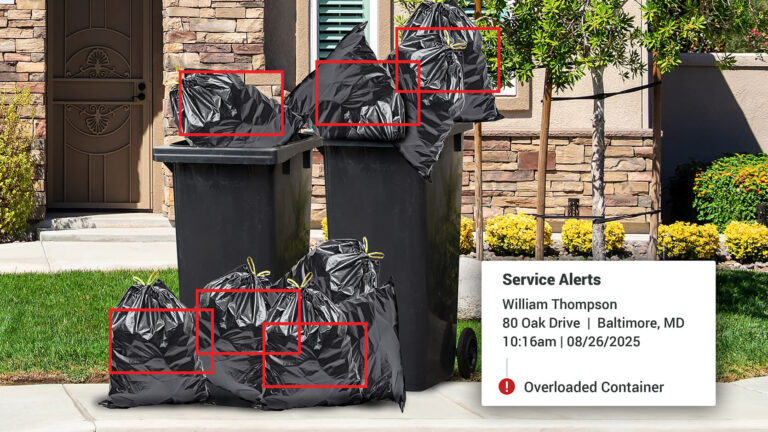
3rd Eye developed its AI-powered Residential Overload Detection solution to give fleets a practical and measurable way to get ahead of the problem. This is a purpose-built toolset designed for the real world of refuse collection, using smart cameras, artificial intelligence, and vehicle connectivity to detect, validate, and document overloaded containers without requiring manual action from the driver. The result is increased productivity, safer and more consistent collection practices, stronger customer compliance, and better revenue capture across your fleet.
Understanding the real impact of residential overloads
Overloaded residential containers may seem like a minor customer issue, but at scale, it becomes an extremely costly operational challenge. When a customer places more material in the cart than the container was engineered to handle, several things happen.
Spillage becomes much more likely, either during container lift or when loose material falls from the container during set out. Spilled waste slows your driver, creates safety concerns for operators who must leave the cab, and forces the fleet to absorb cleanup time that was never planned into the route.
Collection time increases because overloaded carts require more attention and more lift pressure. A small delay repeated across an entire route quickly becomes significant, slowing progress and increasing the likelihood of missed pickups or unplanned overtime.
Disposal costs increase because every extra pound of unbilled waste is a direct hit to profitability. Many haulers absorb these costs without ever realizing how much unrecorded material moves through their system.
And finally, customer service suffers. Without documentation, it becomes difficult to communicate the issue, enforce guidelines, or collect fees when repeated overloads occur. That gap places the burden on the hauler even though the customer behavior caused the issue.
These are the reasons overload detection has become an important focus for modern refuse fleets. It is not about policing customers. It is about protecting the safety of your team, maintaining route schedules, and ensuring that your operation runs the way it was designed.
Automated overload detection built for refuse collection
3rd Eye created its Residential Overload Detection solution with a single goal. Make overload detection and documentation automatic, accurate, and effortless for the driver. The system integrates 3rd Eye smart cameras, advanced AI, sensors, and digital connectivity to identify when a cart exceeds service guidelines. The system works in the background during normal collection.
When the operator approaches the stop, the camera and sensor package captures the lift event. The artificial intelligence evaluates the container and identifies if the material load exceeds the acceptable volume or height. If an overload is detected, the system creates a documented event that includes image evidence and all relevant metadata. The event is matched to the correct customer record inside the 3rd Eye ecosystem. No additional steps or manual actions from the driver are required.
This workflow gives haulers the two things they have historically lacked. A consistent way to document overloads and a reliable data trail for customer communication, revenue recovery, and operational reporting. Drivers never need to stop, photograph, or record notes. The system manages it all with the accuracy fleets expect from 3rd Eye.
How fleets benefit from automated overload documentation
Increased route productivity
Drivers can stay focused on the road and on safe vehicle operation. The system captures overload events automatically and reduces the stop time associated with manual photos or corrections. This keeps the route moving at the intended pace and prevents small delays from snowballing into missed pickups or overtime.
Better customer compliance
When a customer sees a documented example of their overloaded cart, the conversation becomes much easier. Haulers can communicate clear guidelines, recommend alternate service levels, or encourage the use of bulk pickup. Consistent documentation helps customers understand the expectations of the program and reduces future violations.
Cleaner and safer neighborhoods
Fewer overloads mean fewer spills. That translates directly into a cleaner community, safer sidewalks, and stronger public confidence in the collection program. Haulers avoid the repetitive cleanup tasks that eat up route time and create unnecessary exposure to hazards.
More accurate and fair billing
Overloads create a real cost for refuse fleets. With proper documentation, these costs can be recovered through established policies or fees. This protects the financial health of the operation and ensures that the customers generating additional volume contribute appropriately. Many fleets discover that overloaded carts are a much larger expense than originally assumed.
Less strain on equipment
Consistent overloads place extra stress on the automated sideload garbage truck arm, grippers, and hydraulic systems. Reducing overload frequency protects the truck and lowers maintenance expenses. Even moderate overloads contribute to premature wear, which is why fleets benefit from earlier identification and customer communication.
Why fleets choose 3rd Eye for overload management
There are many camera solutions available, but overload detection is not a generic imaging problem. 3rd Eye hardware and AI technologies are purpose-engineered for the unique movements, angles, and lighting conditions found on refuse routes. The solution is designed to capture the exact moment when the container is evaluated, not simply when the truck is driving through the neighborhood.
This accuracy is essential for reliable billing and customer communication. The system provides the clarity and repeatability that haulers need when presenting documented evidence to the customer or municipal partner. It also integrates with the broader Connected Collections ecosystem, which includes route analytics, safety tools, Soft-Pak routing, customer invoicing, and more. Waste hauling fleets get a unified platform instead of disconnected technologies.
Using overload data to strengthen the entire operation
The insights generated by overload detection extend beyond customer billing. For customer-service teams, the captured documentation offers a consistent reference for customer discussions, helping reduce disagreement and build clarity.
Executive teams gain visibility into the true financial impact of overloads, allowing better planning for disposal costs and truck maintenance. When presented with facts and documentation, decision makers can confidently adjust policy or adjust rate structures in a way that is fair and clearly supported by evidence.
Building a better residential collection program
The most successful refuse collection programs share a common characteristic. They stay ahead of problems and use technology that supports making smarter decisions, faster. Residential overload detection gives fleets the ability to address small issues before they turn into costly ones. It helps maintain safety practices, protect route timing, and strengthen overall customer satisfaction.
3rd Eye built this solution to fit naturally into refuse workflows. It serves the driver by removing manual tasks. It serves the fleet by creating accurate documentation. And it serves the community by delivering a cleaner and more predictable collection experience.
Final Thoughts
Residential overloads are one of the most overlooked contributors to higher operational costs, slower routes, and unnecessary safety risks. With automated overload detection from 3rd Eye, fleets gain a reliable way to document these events, communicate clearly with customers, and recover disposal costs that were previously absorbed.
This is practical technology with measurable value. It improves safety practices, strengthens operational efficiency, and supports a cleaner, more consistent collection program. For haulers who want a smarter and more sustainable operation, Residential Overload Detection is one of the most impactful tools available.
Learn more about the full line of 3rd Eye Service Verification technology solutions