How 3rd Eye helps fleets reduce risk, improve safety performance, and protect their reputation
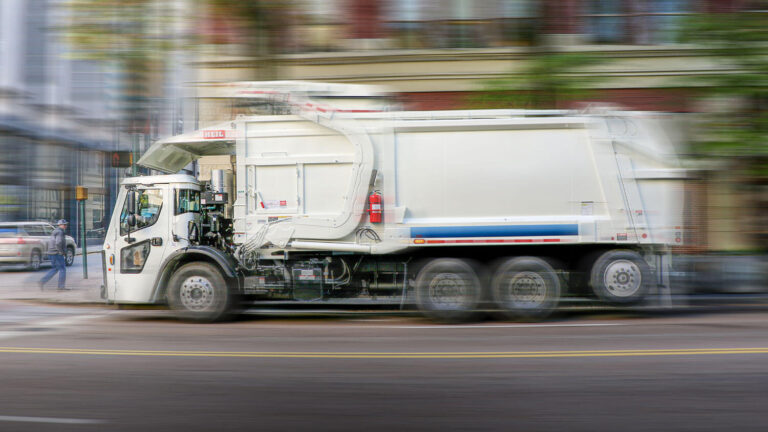
Speed is one of the most common and most underestimated risks in refuse collection. Routes are demanding, schedules are tight, and drivers operate in environments where conditions change constantly. Residential streets, school zones, commercial areas, and mixed traffic patterns all create situations where even small increases in speed can have significant consequences.
For fleet leaders, unmanaged speed is not simply a driver behavior issue. It is an operational risk that affects safety outcomes, liability exposure, equipment life, customer trust, and long-term business performance. Accidents linked to excessive speed often result in more severe injuries, greater property damage, and increased scrutiny from regulators, insurers, and the communities fleets serve.
3rd Eye developed its Speed Reporting solution to give fleets a practical and measurable way to understand how speed shows up across daily operations and how to address it effectively and in a positive way. By combining telematics, location intelligence, video, and an advanced roadway database, 3rd Eye turns speed data into actionable insights that support safer driving habits and smarter fleet management decisions.
Understanding why speed is such a high-risk factor in refuse operations
Speed affects nearly every aspect of vehicle safety. As speed increases, a driver’s ability to react to unexpected events decreases, stopping distances lengthen, and the severity of collisions rises sharply. In refuse collection, where vehicles operate close to pedestrians, parked cars, cyclists, and infrastructure, these risks are amplified.
Many speeding events are not intentional. Drivers move between zones with different posted limits, follow traffic flow, or attempt to make up time on demanding routes. Without clear visibility, drivers may not realize when habits form or when certain areas consistently create risk.
For fleets, the challenge has always been awareness. Traditional methods such as customer complaints, citations, or occasional management ride-alongs only capture a small fraction of real-world behavior. By the time an issue surfaces, an incident may have already occurred. This reactive approach makes it difficult to build a proactive safety culture.
Speed reporting built for real-world fleet environments
3rd Eye Speed Reporting was designed specifically for commercial vehicles operating in complex, high-visibility environments. The system monitors vehicle speed continuously during normal operation and compares it against posted speed limits and defined thresholds using 3rd Eye’s roadway intelligence.
When a speeding event occurs, it is automatically captured and documented. Each event includes key details such as location, time, severity, and supporting video when available. This process requires no manual input from the driver and does not interfere with safe vehicle operation or route efficiency.
Because the system operates passively in the background, drivers remain focused on driving while the technology handles detection and documentation. This removes the burden of manual reporting and ensures that speed data is collected consistently across the entire fleet.
Turning speed data into actionable insight
Raw speed data alone is not helpful; what fleets need is clarity. 3rd Eye Speed Reporting delivers customizable reporting tools that allow managers to analyze speeding behavior by driver, infraction severity, geographic region, or time period.
This targeted visibility makes it possible to identify trends instead of reacting to isolated incidents. Fleets can quickly see where speeding occurs most often, which drivers may need additional coaching, and which routes or zones consistently create challenges.
By prioritizing the most meaningful risks, safety teams can focus their time and resources where they will have the greatest impact. This leads to more effective interventions and measurable improvement over time.
Supporting effective driver coaching and accountability
One of the most valuable outcomes of speed reporting is improved driver coaching. Productive coaching requires objective information and clear context. With documented events, conversations shift from assumptions to facts.
Managers can reference specific speeding events, review video when appropriate, and discuss safer alternatives with drivers. This approach removes ambiguity and helps drivers understand exactly what needs to change and why it matters.
Because patterns are visible over time, fleets can also recognize improvement and reinforce positive behavior. Drivers who adjust habits and demonstrate safer operation can see that progress reflected in the data. This builds trust and supports a culture focused on improvement rather than punishment.
Reducing incidents, liability, and operational disruption
Speed reporting plays a direct role in accident avoidance. By identifying high-risk behavior early, fleets can intervene before incidents occur. Lower speeds reduce both the likelihood and severity of collisions, which helps protect drivers, the public, and fleet assets.
In the event of an accident, documented speed data and video provide critical context. Fleets can demonstrate that safety policies are actively monitored and enforced, which can be valuable during claims investigations or legal proceedings. This level of documentation strengthens risk management efforts and supports more favorable outcomes.
Fewer accidents also mean fewer service disruptions, less vehicle downtime, and lower insurance and repair costs. Over time, these benefits compound into meaningful operational savings.
Protecting equipment and improving route performance
Excessive speed places additional strain on vehicles, particularly during braking, turning, and repeated stop-and-go operation. Drivers who manage speed more effectively tend to operate more smoothly, reducing wear on braking systems, suspension components, and other critical parts.
Speed awareness also contributes to more predictable route execution. Drivers become more familiar with the specific risks of certain areas and adjust their behavior accordingly. This leads to fewer abrupt maneuvers, improved consistency, and better overall route performance.
Strengthening public trust and fleet reputation
Refuse vehicles are highly visible in the communities they serve. Residents notice how trucks move through neighborhoods, especially in residential and school areas. Unsafe driving behavior can quickly generate complaints and critically damage public perception, especially in an environment where incidents are easily recorded and widely shared on social media.
By actively managing speed, fleets demonstrate a commitment to safety and professionalism. Municipal partners and customers gain confidence knowing that safety is monitored, measured, and continuously improved. This trust plays an important role in contract retention and long-term growth.
Why fleets rely on 3rd Eye for speed reporting
Speed management is not a generic telematics function. It requires accurate roadway data, reliable detection, and the ability to capture context through video and location intelligence. 3rd Eye brings these elements together in a purpose-built solution designed for real fleet conditions.
Because Speed Reporting is part of the broader 3rd Eye Safety Solution Suite, fleets benefit from a connected platform that supports safety, risk management, and operational efficiency. Instead of juggling disconnected tools, fleets gain a unified view of driver behavior and performance.
Using speed insights to drive continuous improvement
Over time, speed reporting data provides insight beyond individual events. Leadership teams can evaluate how safety initiatives are performing, identify routes that may need redesign or scheduling adjustments, and refine training programs based on real behavior.
Decisions are driven by documented trends rather than assumptions, supporting continuous improvement across the organization. Safety programs become more strategic, measurable, and aligned with real-world conditions.
Driving Safer Outcomes Through Proactive Speed Management
Speed remains one of the most significant contributors to accidents, liability, and reputational risk in refuse collection. Without clear visibility, fleets are left reacting to problems after they occur.
With 3rd Eye Speed Reporting, fleets gain a proactive solution that transforms speed data into meaningful action. It strengthens driver coaching, reduces risk, supports safer habits, and protects the communities fleets serve.
This is practical technology with real operational value. For fleets committed to safety, accountability, and long-term performance, speed reporting is an essential part of a modern refuse operation.